Walk into any professional hair salon that specializes in textured hair, and you will likely see a brass pressing comb on the stylist's station. Not a ceramic flat iron, not a titanium plate, but a solid brass comb that has probably been in service for years. This is not nostalgia or tradition for its own sake. It is a deliberate choice made by stylists who understand the difference between a tool that looks good in a product listing and a tool that delivers consistent results, client after client. For a purchasing manager at a salon chain or a distributor sourcing styling tools, understanding why this preference exists is essential for making the right procurement decisions.
The purpose of this guide is to help buyers and procurement specialists understand the technical and practical reasons why professional stylists prefer Pressing Comb Brass over ceramic flat irons. We will examine the material properties of brass, the heat transfer characteristics that make it unique, the durability advantages that affect total cost of ownership, and the specific styling techniques where brass outperforms ceramic. We will also provide detailed product parameters from our factory at Ningbo Ruishi Technology Co., Ltd. Whether you are sourcing for a salon chain, a beauty supply distributor, or a private label brand, this guide will give you the technical foundation to make an informed purchasing decision.
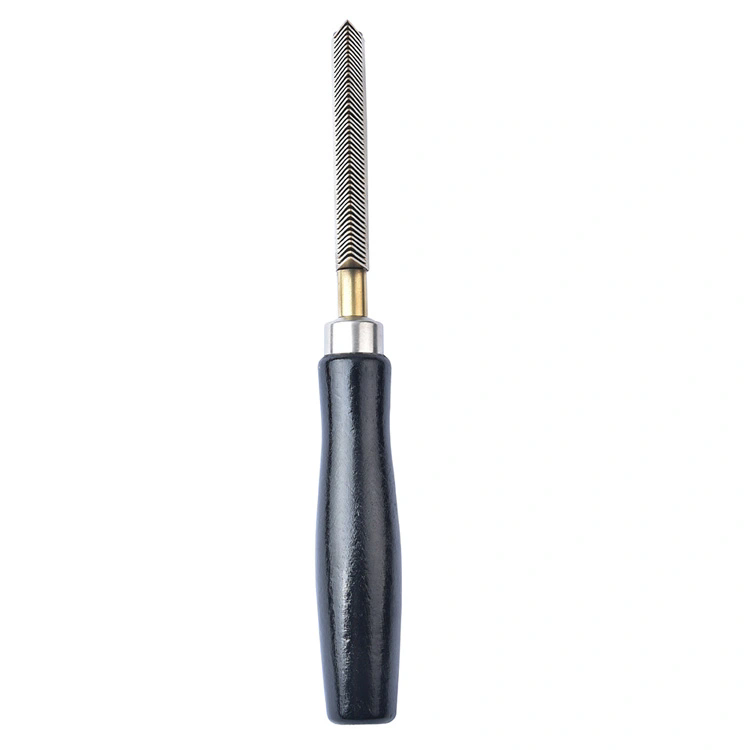
Table of Contents
1. What Is a Pressing Comb Brass and How Does It Work?
A Pressing Comb Brass is a hair styling tool consisting of a metal comb with a handle, designed to be heated and used to straighten or press textured hair. The comb is typically made from solid brass, an alloy of copper and zinc. The brass comb is heated, either on a stove, a hot plate, or an electric heating stand. Once heated to the desired temperature, the stylist uses the comb to press the hair, smoothing the cuticle and straightening the strand. The brass material is chosen for its ability to hold and transfer heat evenly. The comb has two rows of teeth: a fine-tooth row for pressing and a wide-tooth row for detangling and smoothing. The handle is typically made from a heat-resistant material, such as wood or bakelite, to protect the stylist's hand.
The operation of a Pressing Comb Brass is fundamentally different from that of a ceramic flat iron. A flat iron uses two flat plates to clamp and glide along the hair. The heat is applied through direct contact with the plates. A pressing comb, by contrast, uses the teeth of the comb to penetrate the hair and apply heat from within the strand. This method of heat application is more effective for certain hair types because it allows the heat to reach the cortex of the hair, not just the surface. This is why stylists who work with coarse, tightly coiled, or highly textured hair often prefer the pressing comb. The table below summarizes the key differences between a pressing comb and a flat iron.
|
Feature
|
Pressing Comb Brass
|
Ceramic Flat Iron
|
|
Heating Method
|
External heat source (stove, heater)
|
Internal electric heating elements
|
|
Heat Application
|
Comb teeth penetrate hair
|
Flat plates clamp hair
|
|
Temperature Control
|
Manual (stylist judgment)
|
Electronic (dial or digital)
|
|
Material
|
Solid brass
|
Ceramic-coated plates
|
|
Durability
|
Decades
|
2-5 years
|
|
Best For
|
Coarse, textured, natural hair
|
Fine to medium hair, quick styling
|
At Ningbo Ruishi Technology Co., Ltd., our factory specializes in the manufacture of high-quality Pressing Comb Brass for the professional salon market. We use solid brass and precision machining to produce combs that heat evenly, hold their temperature, and last for years. Our engineering team works with stylists and salon owners to understand their requirements and to produce combs that meet their expectations.
2. Why Does Brass Transfer Heat Differently from Ceramic?
The thermal properties of brass are the primary reason why stylists prefer it over ceramic for pressing combs. Brass has a thermal conductivity of approximately 120 W/m·K. Ceramic, by contrast, has a thermal conductivity of 1-30 W/m·K, depending on the specific composition. This means that brass transfers heat much more efficiently than ceramic. When a brass comb is heated, the heat spreads quickly and evenly throughout the comb. There are no hot spots or cold spots. When the comb touches the hair, the heat is transferred rapidly and uniformly. Ceramic, on the other hand, transfers heat more slowly and less evenly. This can result in hot spots that damage the hair and cold spots that fail to straighten it. The table below compares the thermal properties of brass and ceramic.
|
Property
|
Brass
|
Ceramic
|
|
Thermal Conductivity (W/m·K)
|
120
|
1 - 30
|
|
Specific Heat Capacity (J/kg·K)
|
380
|
800 - 900
|
|
Thermal Diffusivity (mm²/s)
|
36
|
0.5 - 10
|
|
Heat Distribution
|
Even, rapid
|
Slower, potential hot spots
|
|
Heat Retention
|
Moderate
|
Good
|
The high thermal diffusivity of brass means that heat moves through the material quickly. This is important for a pressing comb because the stylist needs the comb to be at a consistent temperature along its entire length. If the temperature varies, the styling result will be inconsistent. Brass also has a moderate heat capacity, which means it heats up quickly and cools down quickly. This gives the stylist more control over the temperature. Ceramic has a higher heat capacity, which means it takes longer to heat up and longer to cool down. This can be an advantage for a flat iron, where consistent temperature is maintained electronically, but it is a disadvantage for a pressing comb, where the stylist needs to control the temperature by adjusting the heat source. At our factory, we select brass alloys with the optimal thermal properties for pressing combs. We also precision-machine the comb teeth to ensure uniform thickness and consistent heat transfer.
3. How Does Durability Affect Total Cost of Ownership?
For a salon or a distributor, the durability of a styling tool is a critical factor in the total cost of ownership. A tool that lasts for decades is more economical than a tool that must be replaced every few years, even if the initial purchase price is higher. A Pressing Comb Brass is exceptionally durable. It is made from solid brass, which does not rust, corrode, or degrade over time. The comb can be heated and cooled thousands of times without losing its shape or its thermal properties. With proper care, a brass pressing comb can last for 20 years or more. A ceramic flat iron, by contrast, has a typical lifespan of 2 to 5 years. The ceramic coating can chip, crack, or wear away, exposing the metal underneath. The heating elements can fail. The electronic controls can break. When the flat iron fails, it must be replaced. The table below compares the total cost of ownership of a brass pressing comb and a ceramic flat iron over a 10-year period.
|
Cost Factor
|
Pressing Comb Brass
|
Ceramic Flat Iron
|
|
Initial Purchase Price
|
$30 - $80
|
$50 - $200
|
|
Expected Lifespan
|
20+ years
|
2 - 5 years
|
|
Replacements in 10 Years
|
0
|
2 - 5
|
|
Total Purchase Cost (10 years)
|
$30 - $80
|
$100 - $1,000
|
|
Maintenance Cost
|
Minimal (cleaning)
|
Moderate (replacement parts)
|
|
Total Cost of Ownership
|
Low
|
Moderate to High
|
At Rayvex, our factory manufactures Pressing Comb Brass that are built to last. We use solid brass and precision machining to ensure that our combs maintain their shape, their thermal properties, and their appearance over many years of use. We also offer a range of finishes, including polished brass and chrome-plated brass, to suit different aesthetic preferences. Our goal is to provide our customers with a tool that delivers the lowest total cost of ownership over its lifetime.
4. What Styling Techniques Favor Brass Pressing Combs?
The choice between a Pressing Comb Brass and a ceramic flat iron is not just a matter of material preference. It is also a matter of styling technique. Certain techniques and certain hair types are better suited to a pressing comb. The most important techniques are the "hard press," the "soft press," and the "double press." The hard press involves heating the comb to a higher temperature and applying more pressure to achieve a very straight, sleek result. The soft press uses a lower temperature and less pressure to create a smoother, more natural look. The double press involves two passes: one with a wide-tooth comb and one with a fine-tooth comb. These techniques are difficult or impossible to perform with a flat iron. The table below summarizes the techniques that favor a brass pressing comb.
|
Technique
|
Description
|
Why Brass Pressing Comb Is Preferred
|
|
Hard Press
|
High heat, high pressure for very straight hair
|
Brass transfers heat evenly without hot spots
|
|
Soft Press
|
Lower heat, less pressure for natural look
|
Brass allows precise temperature control
|
|
Double Press
|
Two passes for maximum smoothness
|
Comb teeth penetrate hair for deep heat
|
|
Root Straightening
|
Straightening hair close to the scalp
|
Comb design reaches the root without burning
|
|
Edge Smoothing
|
Smoothing the hairline and edges
|
Precise control with comb teeth
|
At our factory, we design our Pressing Comb Brass to support these techniques. Our combs have teeth that are precisely spaced and shaped to penetrate the hair without pulling or breaking it. The handles are designed for a secure, comfortable grip, even when the comb is hot. The brass is polished to a smooth finish that glides through the hair. We also offer combs in different sizes and tooth configurations to suit different hair lengths and textures. Our goal is to provide stylists with a tool that helps them achieve the best possible results for their clients.
5. What Specifications Should Buyers Look For?
When purchasing a Pressing Comb Brass for a salon or a distribution business, buyers should consider several key specifications. These include the material, the size, the tooth configuration, the handle material, and the finish. The material should be solid brass, not brass-plated steel or aluminum. Solid brass has the best thermal properties and the longest lifespan. The size of the comb should match the intended use. A smaller comb is better for edges and short hair; a larger comb is better for long hair and full-head pressing. The tooth configuration should include both fine and wide teeth. The handle should be made from a heat-resistant material, such as wood or bakelite. The finish should be smooth and free from defects. The table below summarizes these specifications.
|
Specification
|
Options
|
Importance
|
|
Material
|
Solid brass, chrome-plated brass
|
Determines heat transfer and durability
|
|
Overall Length
|
15 - 25 cm
|
Determines ease of use and reach
|
|
Tooth Configuration
|
Fine and wide teeth
|
Allows multiple styling techniques
|
|
Handle Material
|
Wood, bakelite, silicone
|
Protects stylist from heat
|
|
Finish
|
Polished, brushed, chrome
|
Affects glide and appearance
|
|
Weight
|
150 - 300 g
|
Affects balance and control
|
|
Packaging
|
Individual box, bulk
|
Affects retail presentation
|
At Ningbo Ruishi Technology Co., Ltd., we offer a range of Pressing Comb Brass to suit different market requirements. We can customize the size, tooth configuration, handle material, and finish to meet your specific needs. We also offer private label and custom packaging options. Our goal is to provide our customers with a product that meets their technical requirements and their brand image.
6. How Do You Evaluate a Pressing Comb Brass Supplier?
Evaluating a supplier of Pressing Comb Brass is as important as evaluating the product itself. The supplier's manufacturing capability, quality control, and customer service determine whether you will receive a product that meets your specifications and whether you will receive it on time. The key criteria for evaluating a supplier are material sourcing, manufacturing precision, quality control, delivery performance, and technical support. Material sourcing includes the ability to source high-quality brass with the correct alloy composition. Manufacturing precision includes the ability to machine the comb teeth to the correct dimensions and spacing. Quality control includes the systems and processes that ensure consistent quality. Delivery performance includes the ability to meet lead times and to respond to urgent orders. Technical support includes the ability to assist with product design and problem-solving. The table below summarizes these criteria.
|
Evaluation Criterion
|
What to Look For
|
Why It Matters
|
|
Material Sourcing
|
Certified brass alloy, traceability
|
Ensures consistent thermal properties
|
|
Manufacturing Precision
|
CNC machining, tooth spacing tolerance
|
Ensures even heat transfer and smooth glide
|
|
Quality Control
|
Inspection records, ISO certification
|
Ensures consistent product quality
|
|
Delivery Performance
|
On-time delivery record, inventory
|
Keeps your business running
|
|
Technical Support
|
Engineering team, design assistance
|
Helps optimize product for your market
|
At our factory, we have been manufacturing Pressing Comb Brass for the professional salon market for over a decade. We source our brass from certified suppliers, and we use advanced CNC machining to produce combs with precise tooth spacing and smooth finishes. We are ISO 9001 certified, and we maintain detailed records of all inspections. Our technical team is available to assist with product design and customization. And we have a strong track record of on-time delivery to customers around the world. We invite you to evaluate us against these criteria and to consider us as your partner for Pressing Comb Brass.
7. Frequently Asked Questions (FAQ)
Question 1: Is a brass pressing comb better than a ceramic flat iron for all hair types?
Answer: No, a brass pressing comb is not better for all hair types. It is particularly effective for coarse, textured, or tightly coiled hair. For fine or medium hair, a ceramic flat iron may be faster and easier to use. The choice depends on the hair type, the desired result, and the stylist's preference. Many professional stylists keep both tools on hand and select the appropriate one for each client.
Question 2: How do I control the temperature of a brass pressing comb?
Answer: The temperature of a Pressing Comb Brass is controlled by the heat source, not by an electronic dial. Stylists typically heat the comb on a stove, a hot plate, or an electric heating stand. To check the temperature, the stylist can touch the comb to a piece of white paper or a cloth. If the paper scorches immediately, the comb is too hot. If it takes a few seconds to scorch, the temperature is appropriate. Experienced stylists develop a feel for the correct temperature.
Question 3: Can a brass pressing comb rust?
Answer: No, solid brass does not rust. Rust is a form of corrosion that affects iron and steel. Brass is an alloy of copper and zinc, and it forms a protective oxide layer that prevents corrosion. However, brass can tarnish over time, developing a dull patina. This can be removed with a brass polish. Chrome-plated brass combs are also available for those who prefer a shiny, tarnish-resistant finish.
Question 4: What is the difference between a fine-tooth and a wide-tooth pressing comb?
Answer: A fine-tooth pressing comb has closely spaced teeth and is used for pressing and straightening the hair. A wide-tooth pressing comb has widely spaced teeth and is used for detangling and smoothing the hair before pressing. Most pressing combs have both fine and wide teeth, allowing the stylist to perform both functions with one tool.
Question 5: How do I clean and maintain a brass pressing comb?
Answer: To clean a Pressing Comb Brass, allow it to cool completely, then wipe it with a soft cloth to remove any product residue. For deeper cleaning, use a brass polish or a mixture of vinegar and salt. Avoid using abrasive cleaners or steel wool, which can scratch the surface. To maintain the comb, store it in a dry place and avoid dropping it, as the teeth can bend. With proper care, a brass pressing comb can last for decades.
8. Conclusion
Professional stylists prefer Pressing Comb Brass over ceramic flat irons for several compelling reasons: superior heat transfer, exceptional durability, and the ability to perform specialized styling techniques that are difficult or impossible with a flat iron. For buyers and procurement specialists, understanding these reasons is essential for making informed purchasing decisions. A brass pressing comb is not just a tool; it is an investment in quality, reliability, and client satisfaction. At Ningbo Ruishi Technology Co., Ltd., our factory has the expertise and the equipment to manufacture high-quality Pressing Comb Brass that meet the most demanding requirements of the professional salon market. We use solid brass, precision machining, and rigorous quality control to ensure that every comb we produce delivers reliable performance and long service life.
Whether you are a salon owner, a beauty supply distributor, or a private label brand, we invite you to contact us to discuss your requirements. We can provide samples, technical data, and customized solutions. Our commitment to quality and customer satisfaction has made us a trusted partner for businesses around the world.
Contact Ningbo Ruishi Technology Co., Ltd. today to discuss your Pressing Comb Brass requirements and discover how our products can meet the needs of your professional customers.