Walk into any professional salon that specializes in textured hair, and you will likely see a familiar tool on the styling station: a brass pressing comb. Despite the proliferation of electric flat irons, ceramic straighteners, and titanium styling tools, the brass pressing comb has maintained a loyal following among experienced stylists. It is not a nostalgic relic; it is a precision instrument that delivers results that modern electric tools often struggle to replicate. The pressing comb brass is heated over a stove or a hot plate, and its metal teeth glide through the hair, smoothing the cuticle and creating a sleek, straight finish. The tool's enduring popularity is a testament to its unique combination of thermal properties, durability, and tactile control.
But what exactly are the advantages that keep pressing comb brass popular in salons? The answer lies in the material science of brass, the design of the comb, and the specific needs of professional stylists who work with a diverse range of hair textures. Brass has a thermal conductivity and heat capacity that make it ideal for even heat distribution and consistent styling. It is durable and can withstand the high temperatures required for effective straightening. It provides a tactile feedback that allows the stylist to feel the hair as they work, which is essential for precision styling. And it is a tool that has been refined over generations, with a design that has proven its effectiveness in the hands of skilled professionals. This article will examine these advantages in detail, providing a comprehensive technical analysis of the pressing comb brass. We will also provide specifications for our pressing comb brass products from our factory at Ningbo Ruishi Technology Co., Ltd.
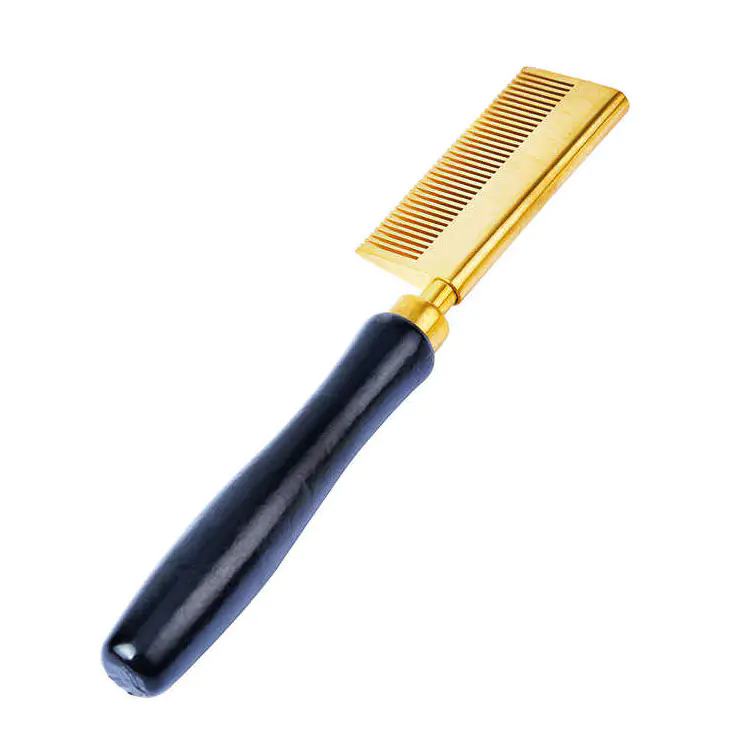
Table of Contents
1. What Is a Pressing Comb Brass and How Is It Used?
A pressing comb brass is a hair styling tool made from brass, an alloy of copper and zinc. It consists of a handle, typically made from wood or heat-resistant plastic, and a row of metal teeth. The comb is heated, traditionally over a stovetop or a specialized hot plate, until it reaches the desired temperature. The stylist then passes the comb through the hair, using the heated teeth to straighten and smooth the hair. The process is often followed by a second pass with a finer-toothed comb or a brush to further refine the style. The pressing comb brass is a traditional tool that has been used for generations, particularly in the styling of textured and curly hair. Its design allows for precise control and even heat distribution, making it a favorite among professional stylists.
The use of a pressing comb brass requires skill and experience. The stylist must be able to judge the temperature of the comb by its appearance or by testing it on a cloth or paper. If the comb is too hot, it can burn the hair; if it is too cool, it will not straighten effectively. The stylist must also be able to control the pressure and speed of the comb as it passes through the hair. This level of control is one of the reasons why the pressing comb brass remains popular in salons. It is a tool that rewards skill and experience, and it delivers results that are difficult to achieve with automated electric tools. The table below summarizes the key components of a pressing comb brass.
|
Component
|
Material
|
Function
|
|
Handle
|
Wood, Bakelite, Heat-resistant plastic
|
Provides a cool grip for the stylist
|
|
Teeth
|
Brass
|
Heated to straighten and smooth hair
|
|
Spine
|
Brass
|
Connects the teeth and provides structural rigidity
|
|
Heating Source
|
Stove, hot plate, electric heater
|
Heats the brass teeth to the desired temperature
|
At Ningbo Ruishi Technology Co., Ltd., our factory specializes in the production of high-quality pressing comb brass. We use premium brass alloys that are selected for their thermal properties and durability. Our combs are precision-machined to ensure even tooth spacing and a smooth finish. We offer a range of sizes and tooth densities to suit different hair types and styling preferences.
2. Why Does Brass Offer Superior Heat Retention and Distribution?
The primary advantage of brass as a material for pressing combs is its thermal properties. Brass has a thermal conductivity of approximately 120 W/m·K, which is significantly higher than that of steel (50 W/m·K) or ceramic (1-2 W/m·K). This high thermal conductivity means that heat spreads quickly and evenly throughout the comb. When the comb is heated, the heat is distributed uniformly across all the teeth, ensuring that every strand of hair receives the same temperature. This is crucial for achieving a consistent, uniform straightening result. If the heat were not evenly distributed, some areas of the hair would be over-straightened while others would remain curly.
In addition to its thermal conductivity, brass also has a high heat capacity. This means that it can store a significant amount of thermal energy. When the comb is removed from the heat source and passed through the hair, the brass releases its stored heat gradually, maintaining a consistent temperature throughout the styling process. This is in contrast to materials with lower heat capacity, which cool down quickly and require reheating. The high heat capacity of brass allows the stylist to work for a longer period without reheating the comb, improving efficiency and consistency. The table below compares the thermal properties of brass to other common comb materials.
|
Material
|
Thermal Conductivity (W/m·K)
|
Specific Heat Capacity (J/g·K)
|
Heat Retention
|
|
Brass
|
120
|
0.38
|
Excellent
|
|
Aluminum
|
237
|
0.90
|
Good (but cools quickly)
|
|
Steel
|
50
|
0.49
|
Moderate
|
|
Ceramic
|
1-2
|
0.80
|
Poor (slow to heat, slow to cool)
|
|
Titanium
|
22
|
0.52
|
Moderate
|
At our factory, we select brass alloys that are specifically formulated for optimal thermal performance. We also heat-treat our combs to ensure that they maintain their thermal properties over time. Our pressing comb brass products are tested to verify that they heat evenly and retain heat for the required duration. This commitment to quality ensures that our combs deliver consistent, professional results.
3. How Does the Design of a Brass Pressing Comb Affect Styling Results?
The design of a pressing comb brass is not arbitrary; it is the result of generations of refinement. The key design parameters are the tooth spacing, the tooth length, the comb width, and the handle design. The tooth spacing determines how much hair the comb can accommodate in a single pass. A comb with wider spacing is suitable for thicker, denser hair, while a comb with narrower spacing is suitable for finer hair or for finishing. The tooth length affects how deeply the comb penetrates the hair. Longer teeth are better for thick hair, while shorter teeth are better for precision work near the roots. The comb width determines the coverage area; a wider comb covers more hair in a single pass but may be less maneuverable. The handle design affects the stylist's comfort and control. The table below summarizes the design parameters and their effects.
|
Design Parameter
|
Options
|
Effect on Styling
|
|
Tooth Spacing
|
Fine, Medium, Wide
|
Fine for finishing, wide for thick hair
|
|
Tooth Length
|
Short, Medium, Long
|
Long for thick hair, short for precision
|
|
Comb Width
|
Narrow, Standard, Wide
|
Wide for coverage, narrow for maneuverability
|
|
Handle Design
|
Straight, Ergonomic
|
Ergonomic for comfort and control
|
|
Tooth Profile
|
Round, Flat
|
Round for smooth glide, flat for grip
|
At Rayvex, our factory produces pressing comb brass in a range of designs to suit different hair types and styling techniques. We work with professional stylists to understand their needs and to refine our designs. Our combs are precision-machined to ensure that the teeth are perfectly spaced and aligned, providing a smooth, consistent glide through the hair. We also offer custom designs for salons and distributors with specific requirements.
4. What Role Does Durability Play in Salon Economics?
In a professional salon, tools are subjected to daily use and frequent heating and cooling cycles. A tool that wears out quickly or loses its performance over time is a liability. It must be replaced frequently, which adds to the salon's operating costs, and it may fail at an inconvenient moment, disrupting the stylist's workflow. The durability of a pressing comb brass is therefore an important economic consideration. Brass is a hard, wear-resistant material that can withstand years of use. Unlike plastic combs, which can melt or deform, or ceramic combs, which can chip or crack, brass combs maintain their shape and performance over time. The teeth do not bend or break under normal use, and the surface does not degrade with repeated heating.
The durability of a pressing comb brass translates directly into cost savings for the salon. A high-quality brass comb may cost more initially than a cheaper alternative, but it will last for years, reducing the frequency of replacement. It also reduces the risk of downtime due to tool failure. For a busy salon, the cost of a single lost appointment due to a broken tool can exceed the price of the tool itself. The table below compares the lifespan and total cost of ownership of brass combs versus other materials.
|
Material
|
Typical Lifespan
|
Initial Cost
|
Replacement Frequency
|
Total Cost of Ownership (5 Years)
|
|
Brass
|
5-10 years
|
Medium
|
Low
|
Low
|
|
Aluminum
|
2-3 years
|
Low-Medium
|
Moderate
|
Medium
|
|
Plastic
|
6-12 months
|
Low
|
High
|
High
|
|
Ceramic
|
1-2 years
|
Medium-High
|
Moderate-High
|
High
|
At our factory, we use high-quality brass alloys and precision manufacturing processes to ensure that our pressing comb brass products are durable and long-lasting. We also offer a range of finishes, including polished and brushed, to enhance the appearance and corrosion resistance of the combs. Our goal is to provide tools that deliver reliable performance and excellent value over their entire service life.
5. How Does Brass Compare to Other Comb Materials?
When selecting a pressing comb, stylists have several options, including brass, aluminum, steel, ceramic, and plastic. Each material has its own advantages and disadvantages. The table below compares these materials across key performance criteria.
|
Material
|
Heat Distribution
|
Heat Retention
|
Durability
|
Weight
|
Cost
|
|
Brass
|
Excellent
|
Excellent
|
Excellent
|
Moderate
|
Medium
|
|
Aluminum
|
Excellent
|
Good
|
Good
|
Light
|
Low-Medium
|
|
Steel
|
Good
|
Moderate
|
Excellent
|
Heavy
|
Low-Medium
|
|
Ceramic
|
Good
|
Poor
|
Moderate
|
Light
|
Medium-High
|
|
Plastic
|
Poor
|
Poor
|
Poor
|
Very Light
|
Low
|
As the table shows, brass offers the best balance of heat distribution, heat retention, and durability. While it is heavier than aluminum or plastic, the weight is actually an advantage in a pressing comb, as it provides a sense of control and stability during styling. The weight also helps to maintain contact with the hair, ensuring effective heat transfer. At Ningbo Ruishi Technology Co., Ltd., we believe that brass is the superior material for pressing combs, and we are committed to producing the highest quality brass combs available.
6. What Are the Key Specifications for a Professional Pressing Comb Brass?
The key specifications for a professional pressing comb brass include the brass alloy, the tooth spacing, the tooth length, the comb width, the handle material, and the finish. The table below provides a summary of the typical specifications for our pressing comb brass products.
|
Specification
|
Options
|
Notes
|
|
Brass Alloy
|
H62, H65, or equivalent
|
Selected for thermal properties and durability
|
|
Tooth Spacing
|
Fine (1.5 mm), Medium (2.0 mm), Wide (2.5 mm)
|
Fine for finishing, wide for thick hair
|
|
Tooth Length
|
10 mm - 25 mm
|
Longer teeth for thick hair
|
|
Comb Width
|
25 mm - 50 mm
|
Wider combs for larger sections
|
|
Handle Material
|
Wood, Bakelite, Heat-resistant plastic
|
Wood for traditional aesthetic
|
|
Finish
|
Polished, Brushed, Antique
|
Polished for smooth glide
|
|
Overall Length
|
200 mm - 280 mm
|
Standard salon length
|
|
Weight
|
150 g - 300 g
|
Heavier combs provide more control
|
At our factory, we offer a wide range of specifications for our pressing comb brass products. We can customize the tooth spacing, tooth length, comb width, and handle material to meet the specific requirements of our customers. We also offer private labeling and custom packaging for salons and distributors. Our goal is to be a one-stop source for high-quality pressing comb brass products.
7. Frequently Asked Questions (FAQ)
Question 1: What is the best way to heat a pressing comb brass?
Answer: The traditional method is to heat the comb over a stovetop or a specialized hot plate. The comb should be heated until it reaches the desired temperature, which can be judged by its appearance or by testing it on a cloth or paper. Some modern pressing combs come with an electric heating base that provides more precise temperature control. Always follow the manufacturer's instructions for the specific comb you are using.
Question 2: How do I clean and maintain a pressing comb brass?
Answer: To clean a pressing comb brass, allow it to cool completely, then wipe the teeth with a soft cloth and a mild cleaning solution. Do not immerse the comb in water, especially if it has a wooden handle. To remove product buildup, you can use a soft-bristled brush. After cleaning, dry the comb thoroughly to prevent rust or corrosion. Store the comb in a dry place.
Question 3: Can a pressing comb brass be used on all hair types?
Answer: Yes, a pressing comb brass can be used on all hair types, but the results will vary depending on the hair's texture and condition. It is most commonly used on textured, curly, or coily hair to achieve a straight, smooth finish. For fine or damaged hair, a lower temperature and a gentler technique should be used. Our factory offers combs with different tooth spacings to suit different hair types.
Question 4: What is the difference between a fine-tooth and a wide-tooth pressing comb?
Answer: A fine-tooth pressing comb has teeth that are closely spaced, typically 1.5 mm apart. It is used for finishing and for creating smooth, sleek styles. A wide-tooth pressing comb has teeth that are spaced further apart, typically 2.5 mm or more. It is used for detangling and for working through thick, dense hair. Most stylists use both types of combs in their work.
Question 5: How long does a pressing comb brass last?
Answer: A high-quality pressing comb brass can last for 5-10 years or more with proper care. The brass teeth are durable and resistant to wear, and they do not lose their thermal properties over time. The handle may need to be replaced if it becomes loose or damaged. At Ningbo Ruishi Technology Co., Ltd., we use high-quality materials and precision manufacturing to ensure that our pressing comb brass products are durable and long-lasting.
8. Conclusion
The pressing comb brass remains popular in salons because it offers a combination of advantages that no other tool can match. Its superior heat distribution and retention ensure consistent, uniform styling results. Its durable construction provides years of reliable service, reducing replacement costs and downtime. Its design allows for precise control and tactile feedback, which are essential for professional stylists. And its traditional aesthetic and proven performance have earned it a place of honor in salons around the world. At Ningbo Ruishi Technology Co., Ltd., our factory is proud to be a leading manufacturer of high-quality pressing comb brass. We use premium materials, precision manufacturing processes, and rigorous quality control to ensure that every comb we produce meets the highest standards of performance and durability. We offer a wide range of designs and specifications to suit different hair types and styling preferences, and we can customize our products to meet the specific needs of our customers.
Whether you are a salon owner looking for a reliable source of pressing combs, a distributor seeking a manufacturing partner, or a stylist who appreciates the quality of a well-made tool, we invite you to contact us to learn more about our pressing comb brass products. Our team is ready to assist you with product selection, customization, and technical support.
Contact Ningbo Ruishi Technology Co., Ltd. today to discuss your pressing comb brass requirements and discover how our products can enhance your salon's styling services.